You open the bill (or check your account) and get that familiar sinking feeling: How is it this high again?
You’ve already tried the obvious stuff—turning off lights, adjusting the thermostat, maybe even swapping a few bulbs. And yet the monthly total still seems to do whatever it wants.
If you feel powerless about your energy costs, read this with one goal in mind: regain clarity and control—without turning your life into a never-ending “energy project.”
The One Big Idea: Basics first, upgrades second.
In this guide, you’ll learn:
- How to spot the few energy “leaks” that matter most (without guessing)
- A simple step-by-step plan to lower household electricity use with less effort than you think
- How to evaluate bigger options—like solar, backup power, or DIY systems—without getting overwhelmed
You don’t need to become an engineer. You just need a clean process you can follow.
Next: a quick reality check to make this feel less frustrating and more solvable.
Quick Reality Check
High energy costs are common because home energy use is a moving target. Weather changes. Rates change. Equipment ages. And most homes quietly waste power in ways you don’t notice day to day.
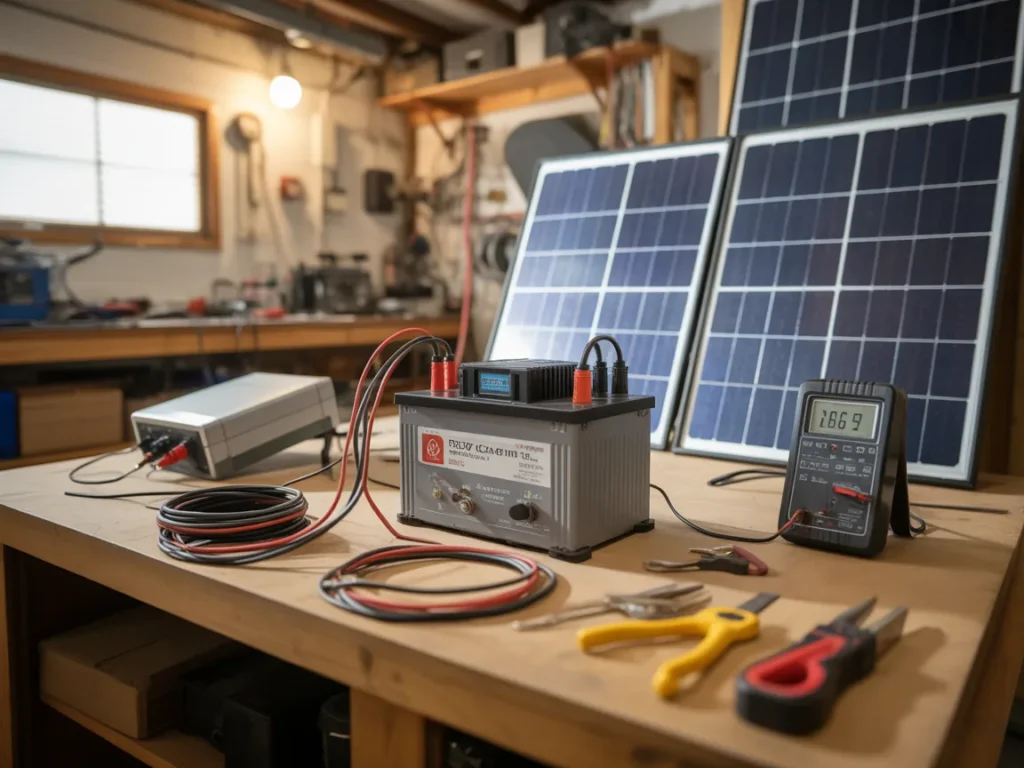
If you feel powerless about your energy costs, read this as permission to stop “trying random tips” and start using a simple plan.
Typical frustrations look like this:
- You cut back… but the bill barely moves
- You’re not sure whether the real culprit is heating/cooling, appliances, or something else
- You want to be more energy efficient, but you don’t have time for complicated research
You’re not behind—you just need a simple plan.
Next: the framework that keeps you from doing a lot of work for tiny results.
The Core Framework
When it comes to lowering energy costs, most people fail for one reason: they scatter effort across dozens of small actions without first identifying what matters most.
Use this three-part framework instead:
What matters most (the key variables)
A few categories drive most residential electricity usage:
- Heating and cooling patterns
- Hot water use
- Big appliances and “always-on” devices
- Insulation/air leaks and how hard your system has to work
If you don’t identify which category is dominating your home, you’re just guessing.
The basics (the core actions)
The basics are the boring steps that create real savings:
- Measure real usage (even simple measurements help)
- Reduce waste (air sealing, settings, habits that actually stick)
- Tune what you already own (maintenance, efficient operation)
The next layer (the upgrade people skip)
After the basics are solid, then the bigger moves make sense:
- Strategic upgrades that pay off because your home is already optimized
- Better planning for outages or energy independence
- DIY systems or structured guides that show you what to do first, second, and third
Example: If your HVAC is overworking because of air leaks, it’s smarter to seal and tune first—then consider bigger upgrades.
Example: If standby power draw is high, finding the “always-on” culprits can change your baseline usage without changing your lifestyle.
Next: a beginner-friendly step-by-step plan you can run this week.
The Step-by-Step Plan (Beginner’s Guide)
This is designed for homeowners and energy efficiency seekers who want results without obsessing. If you feel powerless about your energy costs, read this section like a checklist you can repeat monthly.
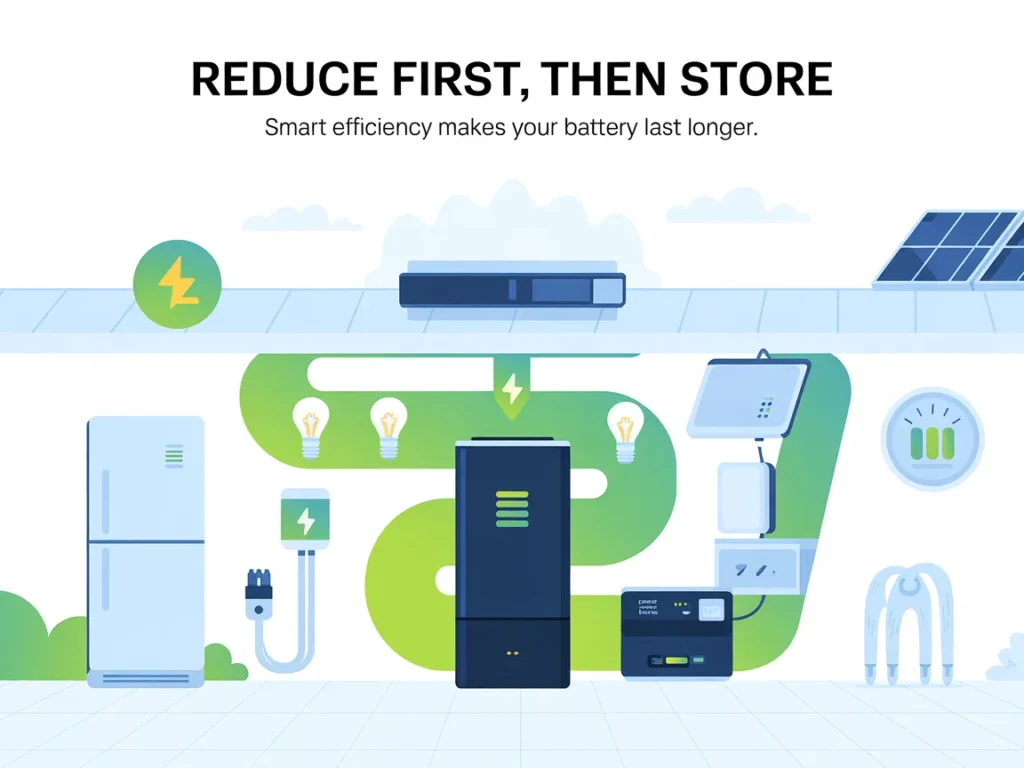
Step 1: Get visibility on what’s really driving your bill
Before you cut anything, you need a simple baseline. Most households are shocked by where electricity usage actually comes from.
Use the bill, your utility portal (if available), and a quick room-by-room scan. You’re not trying to be perfect—you’re trying to stop guessing.
Checklist:
- Pull the last 3–6 months of bills and note the highest month
- Look for seasonal spikes (summer AC vs. winter heating)
- Identify your “big load” appliances (HVAC, water heater, fridge/freezer, dryer)
- Do a quick scan for always-on devices (routers, TVs, consoles, chargers, office gear)
- Write down your top 3 suspects (don’t list more than 3 yet)
Do this now: Open your last bill and circle the month with the highest usage.
Step 2: Stabilize heating and cooling with simple wins
For many homes, HVAC efficiency is the main lever. Not because you need a new system—but because small leaks and habits can force your equipment to run longer than it should.
Think of it as reducing “resistance” so comfort costs less.
Checklist:
- Replace or clean HVAC filters on schedule
- Set a realistic thermostat routine you can live with
- Close gaps around doors/windows where you can feel airflow
- Use fans to improve comfort before dropping the thermostat further
- Keep vents unblocked (rugs, furniture, curtains)
- Schedule basic maintenance if it’s been neglected
Do this now: Replace/clean your HVAC filter and clear every blocked vent you can find.
Step 3: Cut stealth usage from always-on and standby power
Even efficient homes can waste electricity through constant background draw. This is where “I already turn off the lights” people often find the real opportunity.
The goal is not to unplug your life. The goal is to stop paying for things you’re not using.
Checklist:
- Identify devices that stay warm or lit when “off”
- Consolidate chargers and unplug the ones that aren’t used
- Put entertainment gear (TV, soundbar, console) on a switchable power strip
- Turn off unused computers/monitors overnight
- Reduce unnecessary exterior lighting hours
- Make one “shutdown routine” that takes under 60 seconds
Do this now: Put your TV/console setup on a power strip you can switch off at night.
Step 4: Make hot water cheaper without sacrificing comfort
Hot water is an energy drain that hides in plain sight—especially if your household routines are inconsistent.
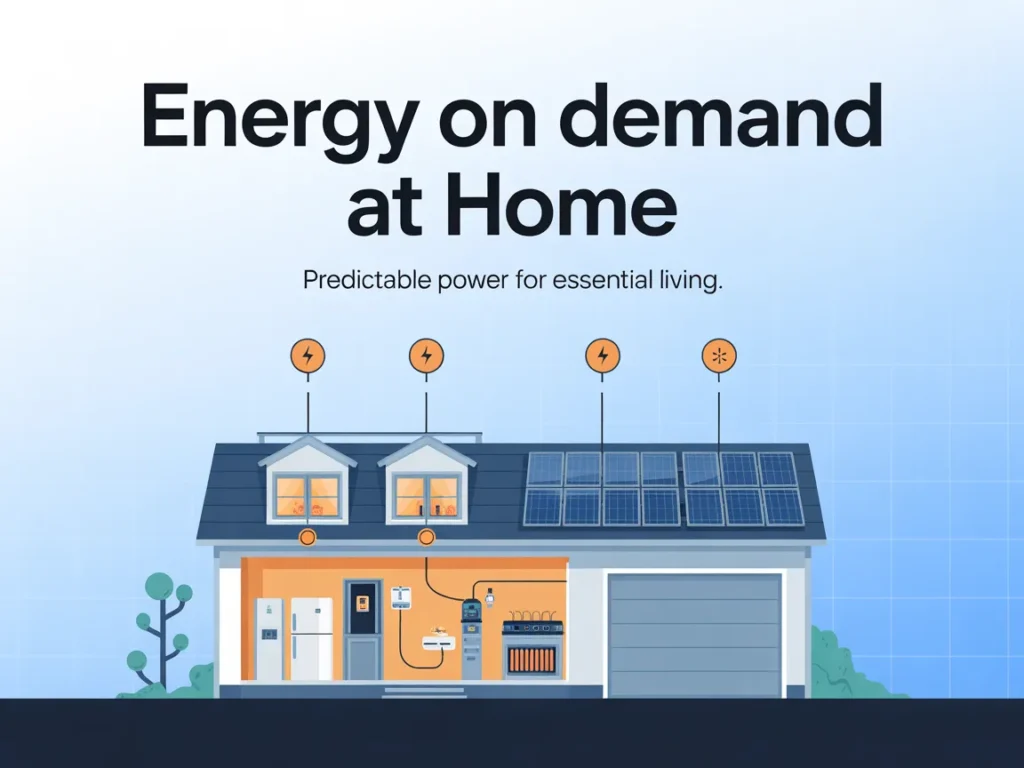
You’ll often get better outcomes from small operational changes than from chasing a huge upgrade too early.
Checklist:
- Shorten shower time slightly (start with 2 minutes less)
- Wash clothes in cold when possible
- Fix obvious hot-water leaks (drips add up)
- Run dishwasher and laundry with full loads
- Reduce water heater “overheating” if it’s set unnecessarily high (follow safe manufacturer guidance)
- Insulate exposed hot-water pipes where practical
Do this now: Switch your next two laundry cycles to cold and see if anyone even notices.
Step 5: Decide whether you need a bigger move (and choose one direction)
Once you’ve done the basics for a couple of weeks, you’ll be in a much stronger position to evaluate bigger options like renewables, backup power, or DIY approaches. This is where many homeowners feel stuck—too many choices, too much conflicting advice.
Remember: basics first, upgrades second. Upgrades work best when your home isn’t bleeding energy.
Checklist:
- Write down what you want most: lower bills, outage resilience, energy independence, or all three
- Decide your constraint: budget, time, complexity, space, HOA/rules
- Note your comfort level with DIY vs. “done-for-you”
- Identify whether you want a tutorial-style system or professional consultation
- Choose one path to research next—only one
Do this now: Choose your main goal (lower bills vs. resilience vs. independence) and commit to one path for 30 days.
Common Mistakes

Chasing tiny tips before finding the big drivers
Why it happens: Small tips feel easy—and they’re everywhere.
Simple fix: Start with your top 3 suspects and focus there for two weeks.Assuming your habits are the problem (when the home is the problem)
Why it happens: People blame themselves instead of airflow, insulation, or worn systems.
Simple fix: Do basic sealing and maintenance first; habits come second.Changing thermostat settings constantly
Why it happens: It feels like you’re “doing something,” but it often creates inefficiency.
Simple fix: Use a simple schedule you can maintain and stop micro-adjusting.Ignoring standby power because it seems small
Why it happens: Each device seems minor, but totals can be meaningful.
Simple fix: Power strips and a 60-second shutdown routine.Buying upgrades without a plan
Why it happens: A shiny “solution” seems faster than diagnosing the real issue.
Simple fix: Lock in basics first so upgrades actually perform.Trying to do everything at once
Why it happens: Energy cost anxiety creates urgency—and overwhelm.
Simple fix: One change per week, repeatable routines, and simple tracking.
Options Comparison
Here are five practical approaches homeowners consider when they feel stuck. The “right” choice depends on your goals, how hands-on you want to be, and what your home allows.
Utility-focused efficiency (bill review + usage tracking)
Best for: People who want clarity fast with minimal tools
Pros:
- Quick baseline from bills and utility portals
- Helps identify seasonal patterns
- Low effort to start
Cons: - Doesn’t always pinpoint the exact device
- Can feel vague without follow-through
Home basics optimization (sealing, maintenance, settings)
Best for: Most homeowners who want reliable results
Pros:
- Often improves comfort along with savings
- Doesn’t require major purchases
- Builds a foundation for future upgrades
Cons: - Takes a bit of time and consistency
- Some issues require professional help
Appliance and standby reduction (smart strips, routines)
Best for: Busy households with lots of electronics
Pros:
- Easy to implement room by room
- Reduces “always-on” waste
- Creates simple habits that stick
Cons: - Savings vary by household
- Requires ongoing routine (but small)
Renewable energy/solar path
Best for: Homeowners aiming for long-term energy independence
Pros:
- Can reduce reliance on the grid
- Aligns with sustainability goals
- Pairs well with an optimized home
Cons: - Research-heavy
- Home suitability varies (roof, rules, location)
DIY system-based learning (structured guide/training)
Best for: DIY enthusiasts and self-sufficiency seekers who want a clear walkthrough
Pros:
- Step-by-step structure can reduce confusion
- Helps you understand what to do first vs. later
- Can be used as an education tool before committing to upgrades
Cons: - Requires attention and follow-through
- Not ideal if you want zero learning curve
Which option should you pick?
If you’re a homeowner trying to regain control quickly, start with home basics optimization plus standby reduction—that combination is usually the least overwhelming. If you’re more DIY-minded and motivated by energy independence, a structured system can help you think in sequences (what to fix first, what to add later) without bouncing between random videos and opinions.
Next: a resource that may help if you prefer a guided, step-by-step walkthrough.
Resources
If you’re the type of person who feels calmer with a clear blueprint—rather than piecing together advice from a hundred places—then a structured presentation can be helpful.
The Energy Revolution System presentation is built around a DIY-style, step-by-step approach to understanding an alternative energy setup and how the overall idea works.
Even if you’re not sure it’s “for you,” it can still be worth watching as an educational walkthrough—so you can compare it against other options with more confidence.
You’ll be able to see how it works, what’s included, and whether it fits you—without needing to decide anything upfront.
SEE THE FULL PRESENTATION HERE
In the presentation, you’ll see a guided walkthrough that can help you think more clearly about your next steps—especially if you’re exploring DIY and energy independence alongside lowering household electricity use.
In the presentation, you’ll see:
- The core idea behind the Energy Revolution System and how it’s explained to work
- What the system/training includes (as laid out in the presentation)
- How the approach is intended to be followed step by step
FAQ
Beginner-friendly learning pace
Is this beginner-friendly?
The presentation is structured as an explanatory walkthrough, so you can follow the concept step by step and decide if it matches your comfort level.
How long does it take to get through the presentation?
It’s designed to be watched/read in a normal sitting, and you can pause and come back if you want to take notes.
Do I need special tools or advanced skills?
The presentation focuses on explaining the system concept and what’s included. Tool/skill needs depend on how hands-on you choose to be afterward.
Fit and practicality for homeowners
Is this only for off-grid living?
It’s often most interesting to people curious about self-sufficiency and alternative energy, but you can still use the ideas to think about lowering dependence on the grid.
What if I live in a place with rules or limited space?
That’s exactly why watching first helps—you can evaluate whether the approach seems compatible with your constraints before going further.
Will this help even if my main goal is lower monthly bills?
It can be useful as part of your research if you’re comparing efficiency measures vs. alternative energy approaches, especially once your basics are handled.
Overwhelm and decision fatigue
I’m already overwhelmed—will this add more complexity?
It’s meant to reduce confusion by laying out a single, coherent explanation rather than scattered advice.
Do I have to commit to anything?
No—you can simply watch/read the presentation to understand the approach and decide whether it’s relevant.
Mini Summary + Action Plan
If you feel powerless about your energy costs, read this recap and keep it simple:
Review 3–6 months of bills to find your real usage pattern
Focus on heating/cooling basics: filters, vents, simple sealing, realistic settings
Reduce standby power with power strips and a quick shutdown routine
Pick one habit you can maintain (not five) and repeat it weekly
Re-check your usage monthly so you don’t drift back into guesswork
Only after basics: compare bigger paths like solar, backup power, or DIY systems
Use a structured walkthrough to understand an approach before investing time and energy
Basics first, upgrades second—because clear fundamentals make every “next step” work better.
Conclusion
If you feel powerless about your energy costs, read this as a reminder that control usually comes from sequencing—not from doing more.
When you lock in the basics (visibility, HVAC fundamentals, standby power, hot water routines), your bill stops feeling like a mystery. And if you decide to explore energy independence later, you’ll be doing it from a calmer, more informed place—because your home is already running tighter.
If you want to see a structured walkthrough of a DIY-style alternative energy approach, the next step is simply to watch the Energy Revolution System presentation and decide whether the idea fits your goals and constraints.
SEE THE FULL PRESENTATION HERE