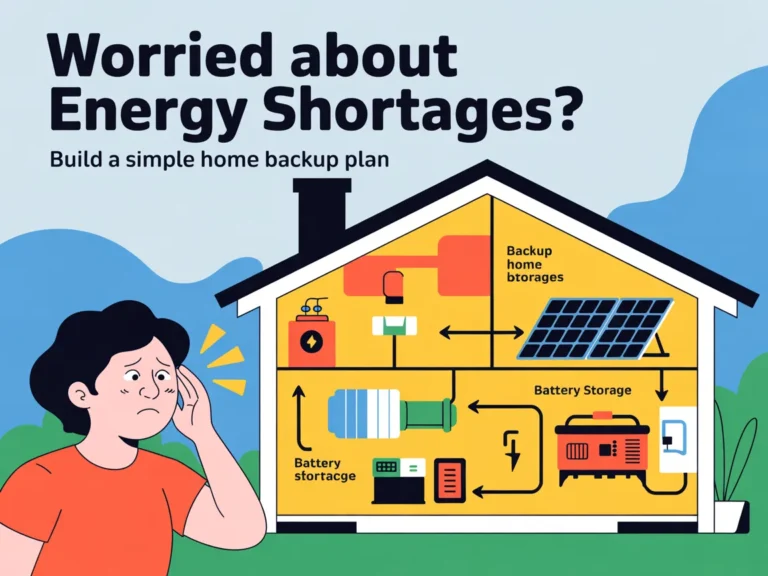
The first time the lights flicker during a storm—or your area issues a “conserve power” alert—it’s normal to feel that low-level unease: What if this lasts longer than a few hours? What if it happens more often?
If you’re worried about energy shortages, you don’t need to become an electrician or spend weeks researching gear. You need a calm, simple home backup plan you understand—and can actually use.
Simple beats complicated.
In this guide, you’ll learn:
- How to decide what you actually need to keep running (and what you don’t)
- A step-by-step way to build a home backup plan without overwhelm
- The most common mistakes that make people spend money and still feel unprepared
Next: a quick reality check so you can stop guessing and start planning.
Quick Reality Check
Energy uncertainty is more common than people think. It’s not always dramatic “doomsday” stuff—it’s often everyday disruptions: weather, local grid issues, maintenance outages, or peak-demand strain.
If you’re worried about energy shortages, it usually shows up like this:
- You’re not sure how long your home could function without the grid
- You have a vague idea of “getting a generator,” but no clear plan
- You’ve read conflicting advice about solar, batteries, and DIY setups
You’re not behind—you just need a simple plan.
Next: the framework that keeps you focused on what matters, not endless options.
The Core Framework
When you’re building a backup plan for your home, clarity comes from separating the problem into three parts:
1) What matters most (the key variables)
Start with the few variables that decide everything:
- Your critical loads (what must stay on)
- Your outage scenario (hours vs. days, occasional vs. frequent)
- Your constraints (budget, space, noise tolerance, HOA rules, DIY comfort)
Example: Keeping a phone charged and a few lights on is a very different plan than running a full-size fridge, a well pump, or medical equipment.
2) The basics (core actions)
The basics are the unglamorous steps that make any backup setup work better:
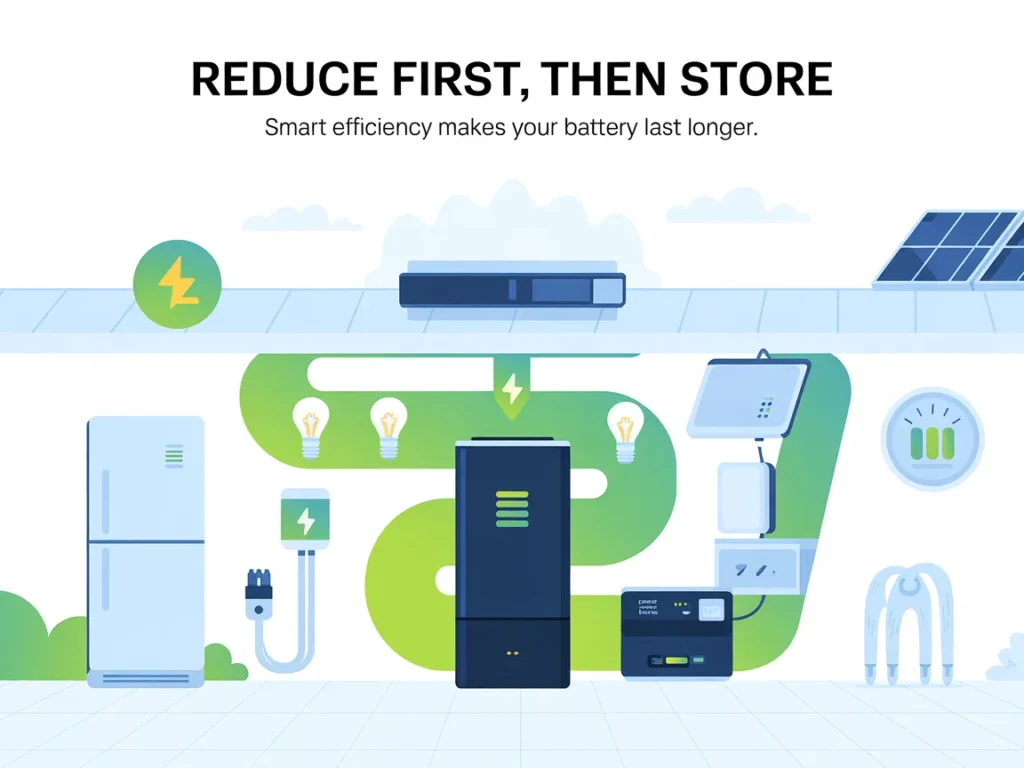
- Reduce waste
- Prioritize what you’ll power
- Build a simple, repeatable routine for outages
Example: A small power solution lasts much longer if you already know which circuits and devices are truly essential.
3) The next layer (the upgrade people skip)
Most people skip the “next layer,” which is where reliability comes from:
- A documented plan
- A tested setup
- A scalable system you can expand
Example: You can own equipment and still be unprepared if you’ve never tested it, don’t have the right cables, or don’t know your power needs.
Next: let’s turn this into a simple, beginner-friendly plan you can follow this week.
The Step-by-Step Plan
This is a Beginner’s Guide style plan—practical, non-technical, and designed to prevent overbuying. If you’re worried about energy shortages, your goal is not perfection. It’s a working baseline you can improve.
Step 1: Define your “must-run” list (not your wish list)
In an outage, most people discover that a lot of what they think they need is optional. Start by identifying what actually protects your safety, food, and communication.
This step also stops the most expensive mistake: trying to power “the whole house” without a clear reason.
Checklist
- Phone charging (and a backup battery pack)
- Basic lighting (a few rooms, not every fixture)
- Food basics (fridge/freezer priorities)
- Essential health needs (if any)
- Internet/router needs (optional but useful)
- Heating/cooling reality: what’s truly feasible for you
Do this now: Write your top 10 “must-run” items in one list—no research yet.
Step 2: Estimate power needs the simple way
You don’t need to be an engineer to plan. You just need a rough idea of what your essentials draw so you can choose realistic options.
If you’re worried about energy shortages, guessing here leads to wasted money: buying too small (frustrating) or too big (expensive and unused).
Checklist
- Look for wattage labels on devices (or manuals)
- Note which items run constantly vs. occasionally
- Identify “startup surge” devices (often motors like fridges)
- Decide your target runtime (e.g., overnight vs. multi-day)
- Separate “nice-to-have” from “must-have”
Do this now: Pick one outage scenario (8 hours, 24 hours, or 3 days) and plan for that first.
Step 3: Choose a backup approach that matches your home
There isn’t one perfect solution. The right plan depends on your space, your noise tolerance, your comfort level, and whether you want something portable or more permanent.
If you’re worried about energy shortages, this is where simple decision rules help: start with what you can set up and maintain.
Checklist
- Decide portable vs. home-integrated
- Decide indoor-safe vs. outdoor-only operation
- Consider fuel/storage reality (if applicable)
- Consider solar compatibility (now or later)
- Think through nighttime use (quiet, safe, simple)
Do this now: Choose one “starter approach” you can realistically use within 7–14 days.
Step 4: Build your outage routine (the part most people forget)
Equipment helps, but a routine is what makes you calm. When the power goes out, you should already know what you’ll do in the first 10 minutes and the first hour.
Being worried about energy shortages eases fast when you replace uncertainty with a checklist.
Checklist
- Decide where lights/flashlights are stored
- Assign one charging station location
- Decide what gets unplugged immediately (to reduce draw)
- Create a “fridge rule” (open less, keep it cold longer)
- Store key cables/adapters together
- Keep a printed list of essential contacts/info
Do this now: Write a 10-minute “power-out checklist” and put it somewhere visible.
Step 5: Test your plan before you need it
A backup plan you haven’t tested is just a hope. Testing doesn’t mean simulating a week-long blackout—it can be as simple as an evening “practice run” where you only use your intended essentials.
If you’re worried about energy shortages, this step is the difference between confidence and stress.
Checklist
- Turn off non-essential breakers (if appropriate) for a short test
- Run only your “must-run” items for 2–4 hours
- Confirm you have every cable/connector you need
- Note what surprised you (noise, heat, runtime, placement)
- Update your must-run list based on real use
Do this now: Schedule a 2-hour test run this week and treat it like practice, not perfection.
Step 6 (Optional): Add layered resilience for longer outages
Once your baseline works, then you can expand. This is where you consider redundancy and longer-term power options without overcomplicating the first build.
Checklist
- Add extra lighting (battery lanterns, headlamps)
- Add redundancy for communications (multiple charging methods)
- Improve food resilience (coolers, shelf-stable foods)
- Consider scaling power generation/storage gradually
- Document your setup so anyone in the home can use it
Do this now: Pick one upgrade that reduces stress the most (often: lighting + charging).
Next: let’s make sure you avoid the traps that waste the most time and money.
Common Mistakes
Mistake 1: Trying to power everything
Why it happens: It feels safer to aim big, especially when you’re worried about energy shortages.
Simple fix: Start with critical loads only, then expand once you’ve tested.
Mistake 2: Buying gear before mapping your essentials
Why it happens: Shopping feels like progress; planning feels slow.
Simple fix: Create your must-run list and a single scenario first—then match gear to that.
Mistake 3: Ignoring storage and accessibility
Why it happens: People focus on capacity, not daily usability.
Simple fix: Store outage items together and keep key tools/cables in one labeled bin.
Mistake 4: Skipping a real test run
Why it happens: Life gets busy, and you assume it will work.
Simple fix: Do a short evening test and write down the “surprises.”
Mistake 5: Not planning for communication
Why it happens: People think “phones will be fine,” until they aren’t.
Simple fix: Add layered charging options and decide a household communication plan.
Mistake 6: Overcomplicating the first version
Why it happens: Online advice makes you feel like you need a perfect system.
Simple fix: Build a baseline you can operate confidently—simple beats complicated.
Next: compare the most common backup approaches so you can choose what fits.
Options Comparison
Below are five common approaches people consider when they’re worried about energy shortages. Each can work—what matters is matching the option to your needs, space, and comfort level.
Option 1: Minimal essentials kit (lights + charging + basic routine)
Best for: Renters, tight budgets, anyone starting from zero
Pros
- Low complexity
- Quick to assemble
- Easy to store and maintain
Cons
- Limited runtime for larger needs
- Won’t run major appliances
Option 2: Portable battery power station (with careful load planning)
Best for: Quiet indoor-friendly backup for small essentials
Pros
- Simple day-to-day usability
- Quiet operation
- Good for charging and small devices
Cons
- Capacity limits require discipline
- Needs recharging strategy
Option 3: Fuel-based generator used safely (outdoor operation)
Best for: Higher power needs like fridge/freezer support
Pros
- Strong power output potential
- Helpful for longer outages if fuel is available
Cons
- Noise and storage considerations
- Requires safe operation habits and planning
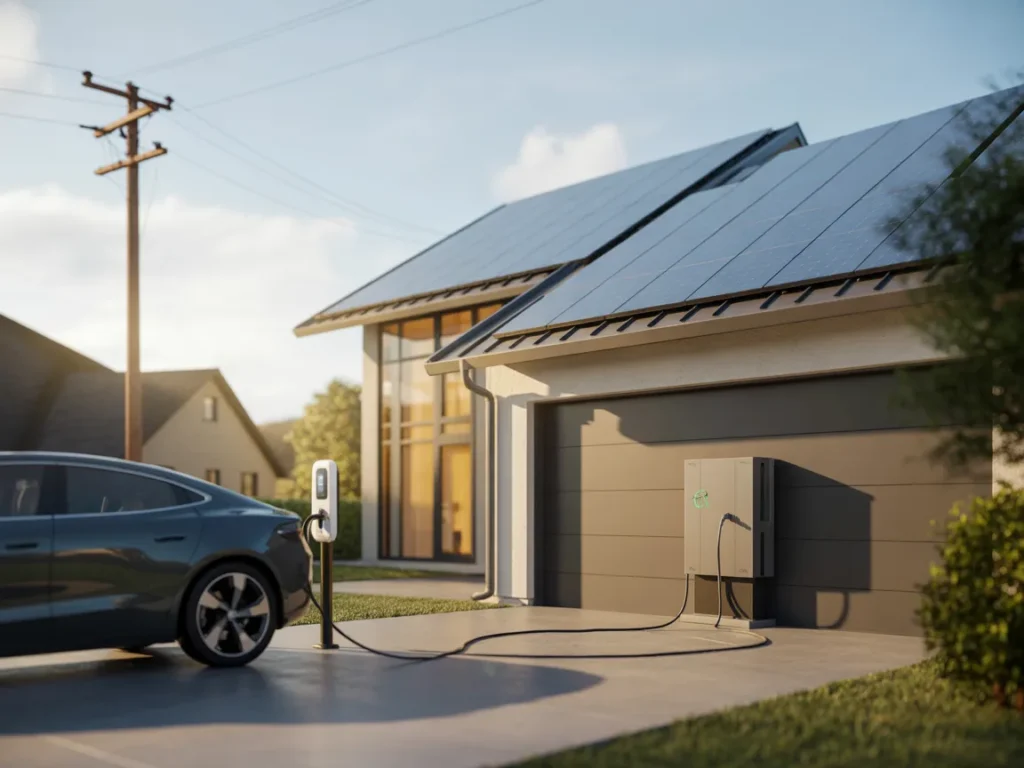
Option 4: Solar + storage as a scalable home power approach
Best for: People who want renewable, repeatable energy resilience
Pros
- Scalable over time
- Can reduce reliance on fuel supply
- Fits a long-term “self-sufficiency” mindset
Cons
- Planning is more involved
- Output varies with conditions and setup
Option 5: A structured DIY home-energy blueprint (plan-first, build second)
Best for: DIY-minded homeowners who want clarity before buying
Pros
- Helps you avoid guesswork
- Keeps you focused on the right sequence
- Supports a scalable approach over time
Cons
- Requires time to read/learn
- Still requires you to take action and build
Which option should you pick?
If you’re an emergency preparedness reader or self-sufficiency seeker, start with the option you can use confidently during a stressful moment. If your budget is tight, build the minimal essentials kit first. If you have higher power needs, choose a plan that addresses them specifically and safely. And if you enjoy DIY but don’t want to get lost in conflicting advice, a structured blueprint can help you decide what to build—and in what order.
Next: a helpful resource that walks through a specific system you can review at your own pace.
Resources
If you’ve been worried about energy shortages, you’ve probably noticed the hardest part isn’t motivation—it’s sorting through conflicting options and turning them into a plan you can actually follow.
That’s why some people choose to watch the Energy Revolution System presentation. It’s positioned as a guided walkthrough that lays out an approach you can review calmly, step by step, without trying to piece everything together from random videos and opinions.
Even if you’re not ready to build anything today, it can still be useful to see how the system is explained—how the pieces fit, what’s included, and whether it matches your comfort level and goals.
You can decide after watching whether it’s relevant for your home.
SEE THE FULL PRESENTATION HERE
If you want a clearer picture of one structured approach (instead of more scattered research), the next logical step is to watch the presentation and evaluate it for yourself.
In the presentation, you’ll see:
- How the Energy Revolution System is laid out as a guided plan
- What the system includes and how it’s meant to be used
- Whether the approach fits a beginner-friendly, step-by-step style
FAQ
Beginner-friendly setup expectations
If I’m worried about energy shortages but I’m not technical, is this still for me?
The presentation is designed to walk you through an approach in a structured way, so you can understand what’s being proposed before deciding what to do next.
Time requirement realism
How long does it take to build a simple home backup plan?
A basic plan (must-run list + routine + small essentials) can be started in a weekend. Scaling up takes longer, but you don’t need everything on day one.
Tools and equipment concerns
Do I need special tools or electrical work?
Many backup basics require no special tools. More advanced solutions can involve more planning—use the presentation to see what’s involved before committing.
Budget anxiety
What if my budget is tight right now?
Start with the lowest-cost steps: prioritize essentials, reduce waste, and create an outage routine. You can expand only when it makes sense.
Living situation limits
What if I live in a smaller home or have limited storage?
A compact essentials kit and a clear routine can still make a big difference. The key is choosing solutions that fit your space and lifestyle.
Noise and convenience
I don’t want something loud or complicated—what should I focus on?
Prioritize quiet, simple essentials first (lighting, charging, documented routine). Then consider whether a larger system is even necessary for your needs.
Practical readiness
How do I know if my plan will actually work in a real outage?
Test it. Do a short practice run and see what surprises you. Small tests build real confidence.
Decision clarity
I’ve read a lot and I feel stuck—what’s the next best step?
Stop researching broadly and follow one clear framework: essentials → baseline setup → test → scale. Watching a structured presentation can help you decide on a direction.
Mini Summary + Action Plan
Here’s your simple action plan if you’re worried about energy shortages and want progress without overwhelm:
List your must-run essentials (communication, lighting, food basics)
Pick one outage scenario (8 hours / 24 hours / 3 days) to plan for first
Choose a starter approach you can set up and use confidently
Store everything together and create a 10-minute outage routine
Do a short test run and update your list based on reality
Document your setup so anyone in the home can follow it
Scale gradually with upgrades that reduce stress the most
Simple beats complicated—especially when you want a plan you’ll actually use.
Conclusion
If you’re still thinking, “Worried About Energy Shortages? Build a Simple Home Backup Plan… but where do I start?”—start small and start clear. A written must-run list, a simple routine, and one tested baseline setup will do more for your peace of mind than another month of scattered research.
Picture the next outage: you reach for your kit, you follow your checklist, your essentials stay powered, and the house feels calm—not chaotic. That’s what a simple plan gives you.
If you want to see a structured walkthrough of one specific approach, the best next step is to watch the Energy Revolution System presentation and decide if it fits your home and your comfort level.
SEE THE FULL PRESENTATION HERE