The first time you notice the “water aisle panic” pattern, it’s hard to unsee.
A storm shows up on the forecast… the store shelves thin out… and suddenly you’re staring at overpriced cases of water thinking, “We should’ve done this earlier.”
And even when nothing dramatic is happening, bottled water has a way of quietly becoming the default: a few cases “just in case,” a few bottles for sports, a few more because the tap tastes off—until it’s a habit you pay for every week.
This guide is here to replace that cycle with a calm, practical plan you can set up once and maintain easily.
Simple beats complicated.
Here’s what you’ll learn (without fear-mongering or overwhelm):
- How to build a realistic home water backup plan that doesn’t rely on constant store runs
- The 3-part framework families use to keep water handled in normal life and emergencies
- A step-by-step checklist you can follow this weekend—then maintain in minutes
Next: a quick reality check so you can see exactly why “bottled water as a plan” breaks down.
Quick Reality Check
Most families don’t fail at preparedness because they don’t care.
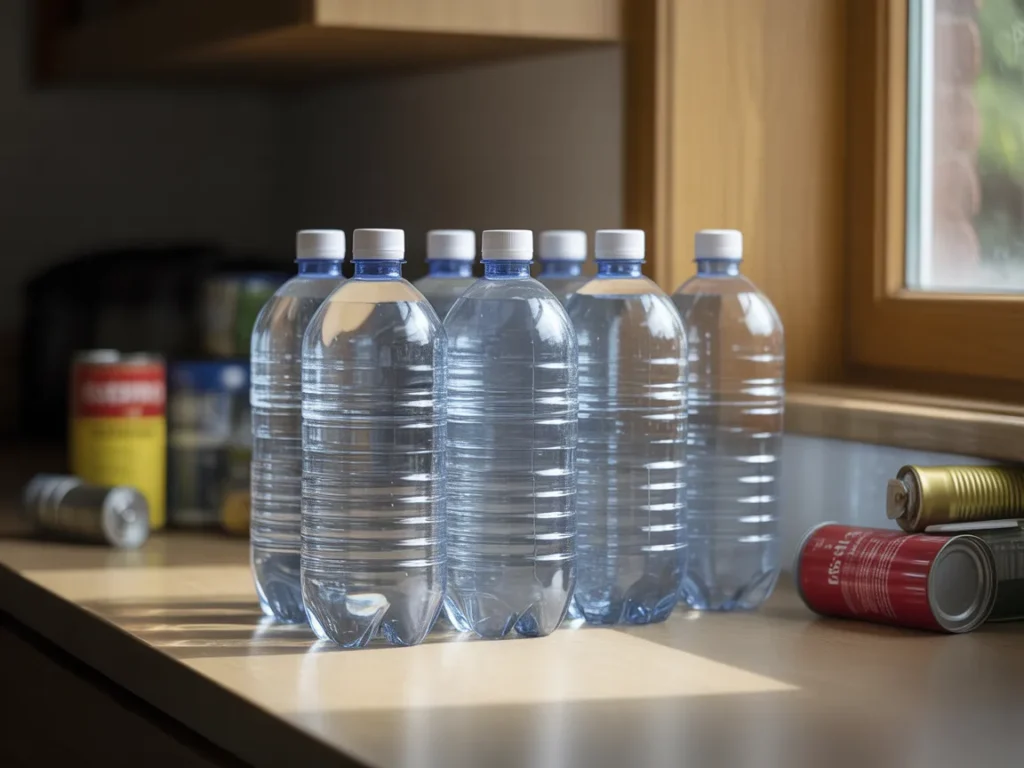
They fail because bottled water feels like a plan—right up until it isn’t.
A few common moments you might recognize:
- You buy cases “when you remember,” but you’re never sure how many you actually have
- You rotate poorly (or not at all), and some of it ends up tasting stale—or gets tossed
- You realize too late that storing enough for a family takes more space (and money) than you expected
None of that means you’re behind. You’re not behind—you just need a simple plan.
Next: the framework that keeps the plan easy, even if you’re starting from zero.
The Core Framework
When it comes to water backup, the winning approach isn’t fancy gear or extreme prep.
It’s a three-part framework that keeps you focused on what matters:
1) What matters most (the key variables)
You don’t need to overthink it—just get clear on the basics:
- How many people you’re planning for
- How long you want to be comfortably covered
- Where the water will live (space you already have, not fantasy space)
If you only do one thing today: define your household’s “coverage target” in plain language (example: “We want a simple backup that covers our family without weekly store trips.”).
2) The basics (core actions)
The basics are boring—but boring is reliable:
- Store water in a way that’s safe and protected
- Keep it accessible
- Make it easy to maintain so you don’t abandon it
3) The “next layer” (the upgrade people skip)
This is the part most families never set up:
- A backup method that reduces dependence on buying and hauling cases
- A setup that can be expanded without becoming a storage nightmare
Example: Many people start with random cases, then later realize they’d rather have a single, organized at-home system they can rely on (instead of constantly “restocking” bottled water like it’s a subscription).
Next: let’s turn that framework into a simple, weekend-friendly checklist.
The Step-by-Step Plan (Beginner’s Guide)
Step 1: Pick your “normal life” goal first
If your plan only works during emergencies, it won’t last.
Start by deciding what you want day-to-day: less waste, fewer store runs, better organization, or simply peace of mind.
Checklist
- Choose your main goal (one): convenience, cost control, organization, or self-sufficiency
- Decide where you’ll keep your backup water (garage, pantry area, utility space)
- Set a simple rule like “We don’t rely on cases as our main backup”
- Assign one person to “own” the plan (even if it’s shared)
Do this now: Write your goal in one sentence and stick it on your fridge or notes app.
Step 2: Stop the “random stash” and create one labeled zone
A water plan fails when it’s scattered.
One half-used case in the garage, three bottles in the trunk, some under the sink—none of that gives you certainty.
Create one obvious, labeled zone so you always know what you have.
Checklist
- Choose one storage zone that stays dry and relatively stable in temperature
- Clear the floor space so containers aren’t sitting in a messy pile
- Add a simple label: “Family Water Backup”
- Keep it accessible (not buried behind holiday decorations)
- Make room for expansion later (even if it’s just a small buffer area)
Do this now: Pick the spot and clear it—even if you don’t fill it today.
Step 3: Choose a storage approach you can actually maintain
The “best” setup is the one you will maintain for months and years.
A lot of families default to bottled water because it’s easy to buy—but it’s annoying to store, heavy to move, and inconsistently rotated.
Instead, decide what fits your household’s reality: space, time, and comfort level.
Checklist
- Decide if you prefer fewer large containers or more small ones
- Consider who will lift and move water in your home
- Keep safety and cleanliness as the priority (covered storage, protected containers)
- Decide how visible you want it (hidden vs. neatly organized)
- Avoid anything that requires frequent complicated steps
Do this now: Choose “maintainable” over “perfect”—you can refine later.
Step 4: Build a rotation rhythm that takes minutes, not hours
Rotation is where bottled-water plans usually collapse.
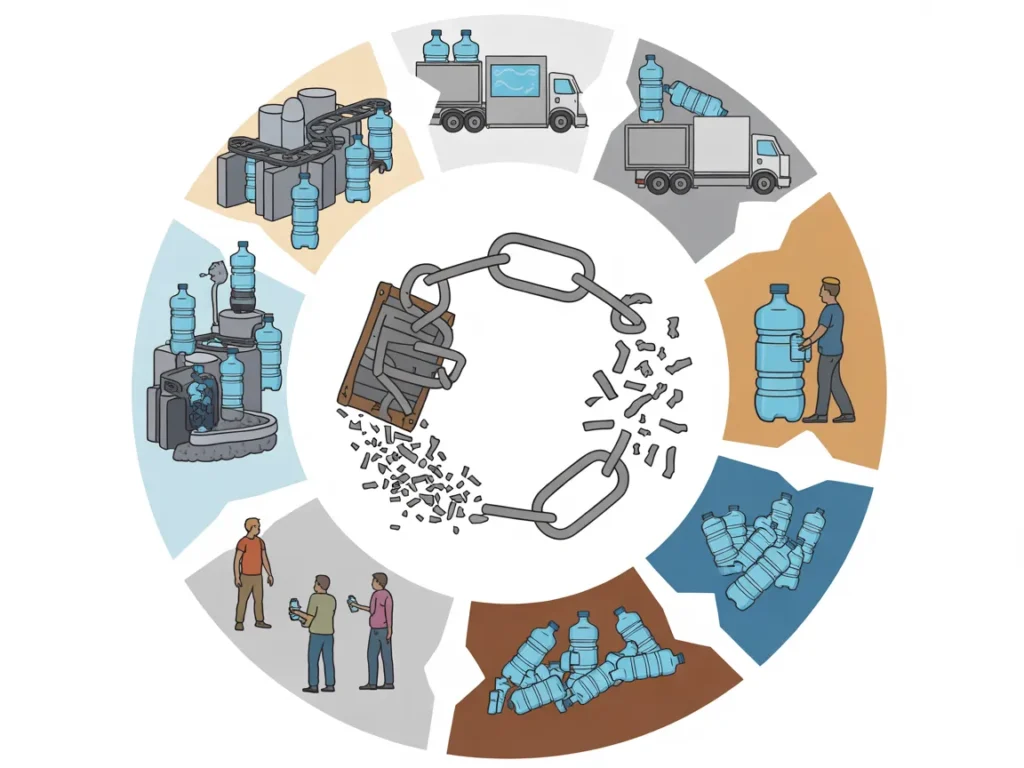
Either nothing gets rotated, or it becomes a weird calendar chore that no one wants.
Your goal: a rhythm that fits into life—simple, predictable, and quick.
Checklist
- Pick a rotation trigger you already do (monthly bill day, first weekend, etc.)
- Keep a basic note: what you have and where it is
- Use “first in, first out” so older water gets used first
- Avoid hoarding water you’ll never touch until it’s too old to want
- Keep the plan simple enough that someone else could follow it
Do this now: Set a recurring reminder for your rotation trigger.
Step 5: Add the “next layer” that reduces dependence on store runs
This is where “Bottled Water Is a Trap: The Smarter, Cheaper Backup Plan Most Families Never Set Up” becomes real in practice.
Cases are a temporary patch. The smarter plan is setting up a home approach that can keep you covered without constant buying and hauling.
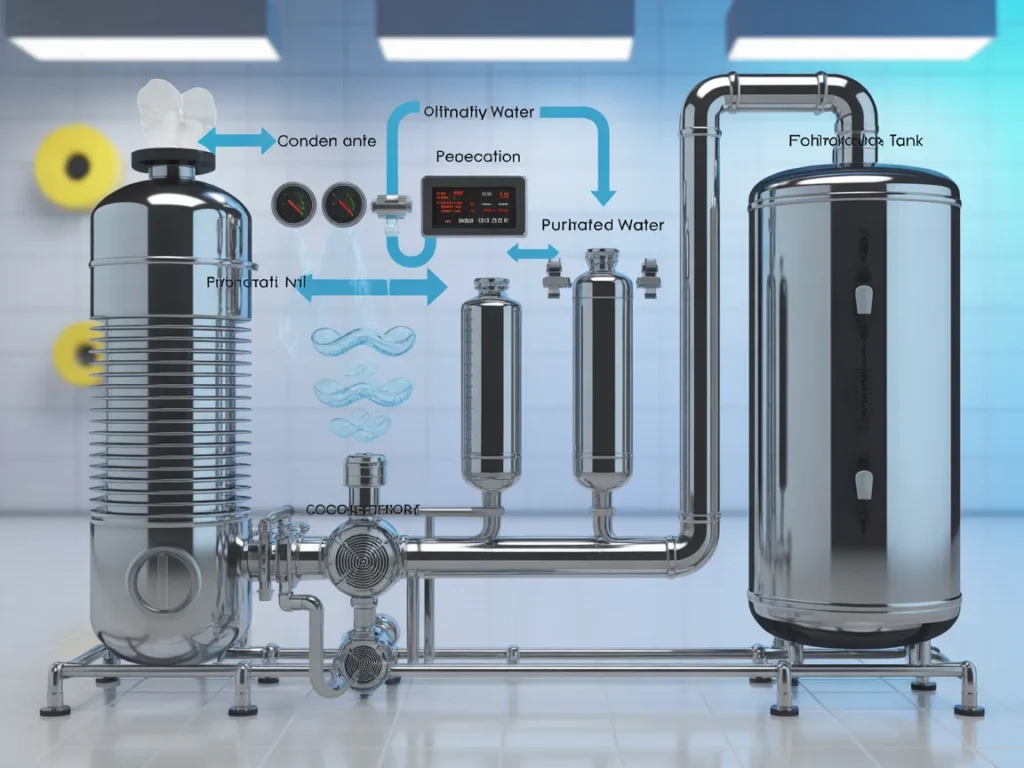
For many families, that “next layer” means exploring an at-home system designed specifically for preparedness-style water storage—something you can set up, understand, and keep ready.
Checklist
- Decide what you want your backup system to do (storage, readiness, organization)
- Aim for a setup you can expand without chaos
- Keep it family-friendly: clear steps, easy access, easy upkeep
- Avoid overly technical solutions if you know you won’t maintain them
- Choose reliability and clarity over gadgets and complexity
Do this now: Decide what you want your “next layer” to look like—simple, organized, and repeatable.
Common Mistakes
Mistake 1: Treating bottled water like a long-term strategy
Why it happens: It’s the easiest thing to grab at the store, so it becomes the default.
Simple fix: Promote bottled water to “short-term convenience,” and build a real home backup plan behind it.
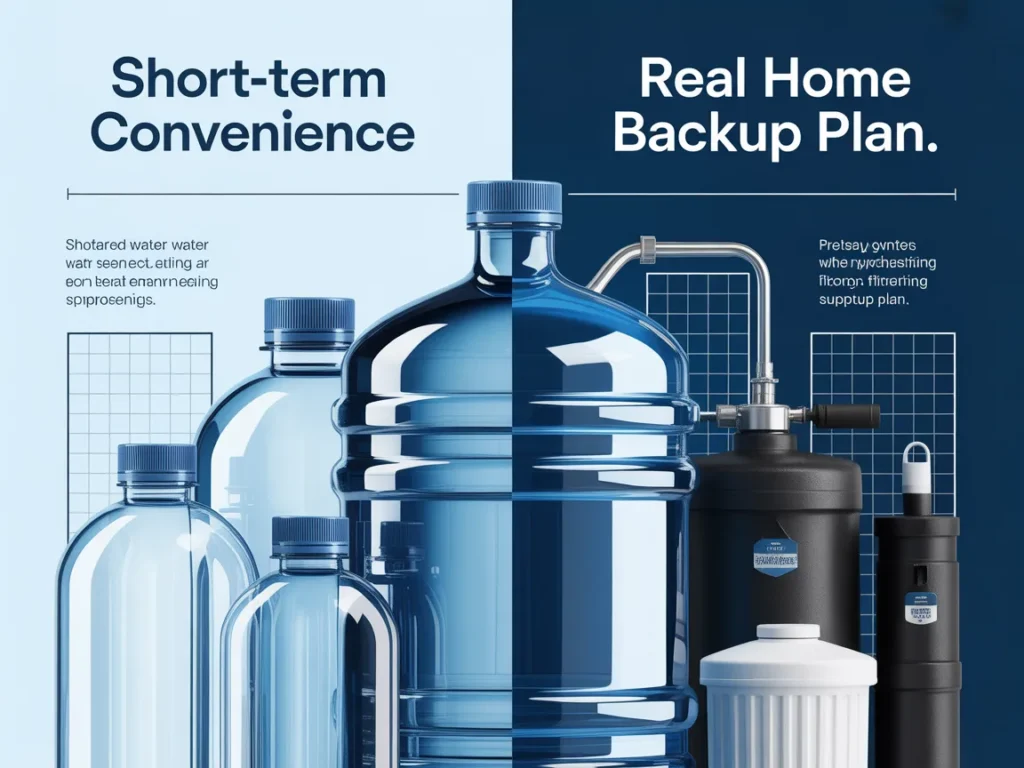
Mistake 2: Buying without a target
Why it happens: Most people buy “a little extra” without knowing what “enough” means.
Simple fix: Pick a coverage target that matches your household and storage space.
Mistake 3: Storing water wherever there’s room
Why it happens: Space is tight, so water gets shoved into random corners.
Simple fix: Create one labeled zone so you always know what you have.
Mistake 4: Choosing containers or methods you won’t maintain
Why it happens: The “ideal” plan looks good online but feels annoying in real life.
Simple fix: Choose what’s realistic for your body, schedule, and home layout.
Mistake 5: Forgetting rotation until it’s a problem
Why it happens: Rotation doesn’t feel urgent—until water tastes off or gets wasted.
Simple fix: Tie rotation to a monthly trigger you already do.
Mistake 6: Overcomplicating the setup
Why it happens: Preparedness content can make it seem like you need a complicated system.
Simple fix: Remember the big idea: Simple beats complicated. Build the basics first, then upgrade.
Options Comparison
Here are five common approaches families use—each with its own tradeoffs.
Option 1: Bottled water cases (store-bought)
Best for: Short-term convenience and quick grab-and-go.
Pros
- Easy to find most days
- Portable
- No setup required
Cons
- Takes up a lot of space fast
- Easy to forget rotation
- Constant re-buying and hauling
Option 2: Refilled jugs and mixed containers
Best for: Families who want low cost and are okay managing multiple items.
Pros
- Flexible and cheap to start
- Easy to add over time
- Works with limited space
Cons
- Can become disorganized
- Inconsistent container quality and upkeep
- Harder to track and maintain
Option 3: A dedicated home water storage system
Best for: Families who want an organized, repeatable plan.
Pros
- More structured than random stashing
- Designed for readiness and storage
- Easier to maintain once set up
Cons
- Requires choosing a method and following a process
- Needs a designated storage area
Option 4: “Only filter the tap” approach
Best for: Daily drinking water improvements (not true backup).
Pros
- Convenient for everyday use
- Can improve taste and usability
- Low clutter
Cons
- Not a full backup plan by itself
- Doesn’t solve outage scenarios
Option 5: Passive “we’ll figure it out” plan
Best for: Nobody—though it’s common.
Pros
- No effort today
- No storage needed
Cons
- Creates last-minute stress
- Usually costs more in a scramble
- Leaves you guessing instead of knowing
Which option should you pick?
If you’re a family that wants a calm, reliable backup without constant store runs, the sweet spot is usually a dedicated, maintainable home storage approach—something organized that fits your space and routines. If your time is limited, prioritize simplicity. If your budget is tight, prioritize reducing re-buying. If you’re not a DIY person, choose a method with clear instructions you can follow without guesswork.
Next: a helpful resource that walks through a preparedness-style setup in a clear way.
Resources
If you’ve ever felt like bottled water is a trap—expensive, bulky, and never quite “enough”—you’re not alone.
Aqua Tower is presented as a home water storage solution designed around being ready when you need it, without depending on last-minute store runs. The reason it’s worth watching the presentation is simple: it shows the concept clearly, how it works, and what the system includes—so you can decide if it matches your home and your comfort level.
Even if you don’t buy anything, seeing a full walkthrough can help you tighten up your plan and avoid the usual mistakes (random stashing, poor rotation, and messy storage).
You’ll see how it works, what’s included, and whether it fits you.
In the presentation, you’ll see the full walkthrough here
- How the Aqua Tower approach is explained and set up for home water storage
- What the system includes (so you can judge if it matches your needs)
- How it’s meant to help you rely less on bottled-water case runs
FAQ
Built for families who are busy
Is this beginner-friendly?
The presentation is designed to walk you through what it is and how it works so you can follow the idea without guesswork.
Does this take a lot of time to maintain?
The goal of an organized home system is simpler upkeep than constantly buying, hauling, and rotating random cases.
Do I need special skills to understand it?
You’ll be shown how it works in the presentation, step by step, so you can decide if it feels manageable for you.
Fit and practicality
Will this work in a regular home with limited space?
The presentation helps you see the physical concept and what’s included, so you can judge whether it fits your space.
Is this only for “prepper” types?
No—most families looking for a calmer backup plan just want clarity and organization, not extremes.
What if I already keep some bottled water on hand?
That’s fine. Many people keep some for convenience—the key is not relying on it as your main long-term plan.
Decision comfort
Do I have to decide anything right away?
No. The presentation is simply a clear overview so you can understand the approach before deciding anything.
What’s the main reason to watch the presentation?
To see exactly how the Aqua Tower system is framed, what it includes, and whether it fits your household’s backup-water goals.
General note: This article is for general educational purposes only and isn’t personal health or safety advice.
Mini Summary + Action Plan
If you remember nothing else from “Bottled Water Is a Trap: The Smarter, Cheaper Backup Plan Most Families Never Set Up,” remember this: a plan you can maintain beats a plan you only think about.
Basics (do these first)
- Pick a clear household goal (normal life convenience + backup readiness)
- Create one labeled storage zone
- Choose a storage method you can realistically maintain
Maintenance (keep it easy)
- Tie rotation to a monthly trigger you already do
- Track what you have with one simple note
Next layer (the upgrade most people skip)
- Reduce dependence on constantly buying and hauling cases
- Learn an organized system approach so you can expand without clutter
Simple beats complicated—especially when you’re planning for a whole family.
Next: if you want to see an organized system explained clearly, watch the walkthrough.
Conclusion
Bottled water isn’t “bad.” It’s just a shaky long-term plan for most households—expensive, bulky, easy to mismanage, and frustrating when you finally need certainty.
“Bottled Water Is a Trap: The Smarter, Cheaper Backup Plan Most Families Never Set Up” comes down to one calm shift: build a backup you can maintain without drama, clutter, or constant store runs.
Picture the next storm forecast or temporary outage. Instead of wondering what’s left in the garage—or whether you should rush out—you already know your setup is handled. It’s organized, accessible, and simple enough to keep up with.
If you want to see one approach explained clearly from start to finish, the Aqua Tower presentation is the next logical step.
SEE THE FULL PRESENTATION HERE