You don’t have to live off-grid to feel the pinch of rising power bills—or the frustration of being dependent on a system you can’t control.
Maybe you’ve looked at rooftop solar and thought: Sounds great… but the quotes, the install delays, the permits, the roof questions, and the upfront commitment feel like a lot. Or you rent, you have shading issues, you’re in an HOA, or you simply don’t want a major project right now.
So: Can You Do Energy Independence Without a Full Solar Install? Yes—at least partially. And in many cases, you can make meaningful progress faster than you think if you focus on the right order of operations.
One simple principle matters most: Basics first, upgrades second.
In this guide, you’ll learn:
- How to define “energy independence” in a way that actually helps you decide what to do next
- A beginner-friendly, step-by-step plan to reduce grid dependence without jumping straight to rooftop solar
- A clear comparison of the options—from efficiency to backup power to alternative systems
Next: let’s level-set what’s realistic (and what’s not) so you don’t waste time or money.
Quick Reality Check
The reason this topic is so common is simple: most people were never taught how to build energy resilience in layers. We’re told it’s either “full solar + batteries” or “nothing.”
Real life is messier.
You might be dealing with:
- A home that leaks energy (drafts, old appliances, poor insulation) so any power solution feels undersized
- A desire for backup power, but confusion about generators vs. batteries vs. “solar generators”
- Analysis paralysis: dozens of gadgets and opinions, but no clear path that fits your budget
The good news: You’re not behind—you just need a simple plan.
Next: here’s the framework that keeps you from skipping the steps that make everything else easier.
The Core Framework
If you want more energy independence without committing to a full solar install, think in three layers:
What matters most (the key variables)
Before you buy anything, you need clarity on a few variables that shape every decision:
- Your goal: lower bills, outage preparedness, partial off-grid capability, or long-term self-sufficiency
- Your load: which devices actually matter (fridge, lights, internet, medical devices, well pump, etc.)
- Your constraints: budget, space, HOA rules, roof limitations, time, and DIY comfort
The basics (core actions)
This is where most progress comes from—and it’s usually cheaper than people expect:
- Reduce wasted energy (air sealing, insulation priorities, smart usage habits)
- Upgrade the worst offenders (old fridge, inefficient HVAC settings, phantom loads)
- Create a “must-run” list so you stop planning for the whole house when you only need key circuits
The “next layer” (the upgrade people skip)
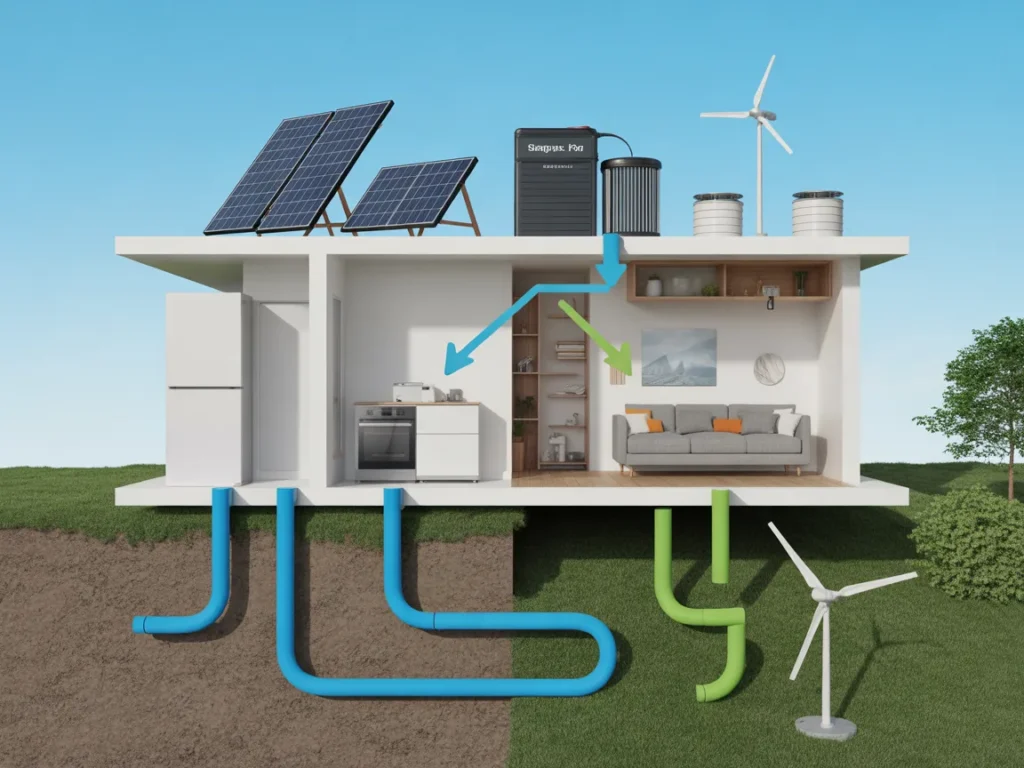
Once the basics are in place, you can add independence strategically:
- Backup power sized to your must-run list
- Portable power for essentials
- Alternative energy approaches that don’t require roof work
Example 1: If your goal is “keep essentials running,” you don’t need to power your whole home—just the right loads, efficiently.
Example 2: If your goal is “lower bills,” you’ll often get better returns from efficiency + smarter usage before you even consider panels.
Next: let’s turn that into a step-by-step plan you can follow this week.
The Step-by-Step Plan (Beginner’s Guide)
Step 1: Define your independence target (not a vibe)
“Energy independence” can mean anything from saving money to running critical devices during outages. The clearer you are, the easier everything gets.
For most homeowners, a practical target is: power the essentials + reduce grid consumption. That’s progress without a massive overhaul.
Checklist:
- Write your top goal: lower bills, outage readiness, or both
- List 5–10 essential devices you’d want in a short outage
- Decide your “comfort threshold” (hours vs. days of coverage)
- Note any constraints (HOA, shaded roof, renting, limited storage space)
- Choose a timeline: “start this weekend” beats “someday”
Do this now: Write your essentials list on paper before you research products.
Step 2: Identify your real energy loads (what you actually use)
You don’t need to become an engineer, but you do need a basic picture of what’s pulling power. This step prevents overspending on systems that don’t match your reality.
Start with two buckets:
- Daily energy drains (HVAC habits, old appliances, always-on electronics)
- Emergency essentials (fridge, lights, phone charging, router, etc.)
Checklist:
- Pull your last 2–3 electric bills and note usage patterns
- Identify “always on” devices (routers, smart speakers, standby loads)
- Find the biggest hitters (space heaters, old refrigerators, inefficient cooling)
- Make a short list of devices you want to run during outages
- If you can, use a basic plug-in energy meter for a few key devices
Do this now: Circle the top 3 devices that drive most of your usage or matter most in outages.
Step 3: Cut the waste first (this is your power multiplier)
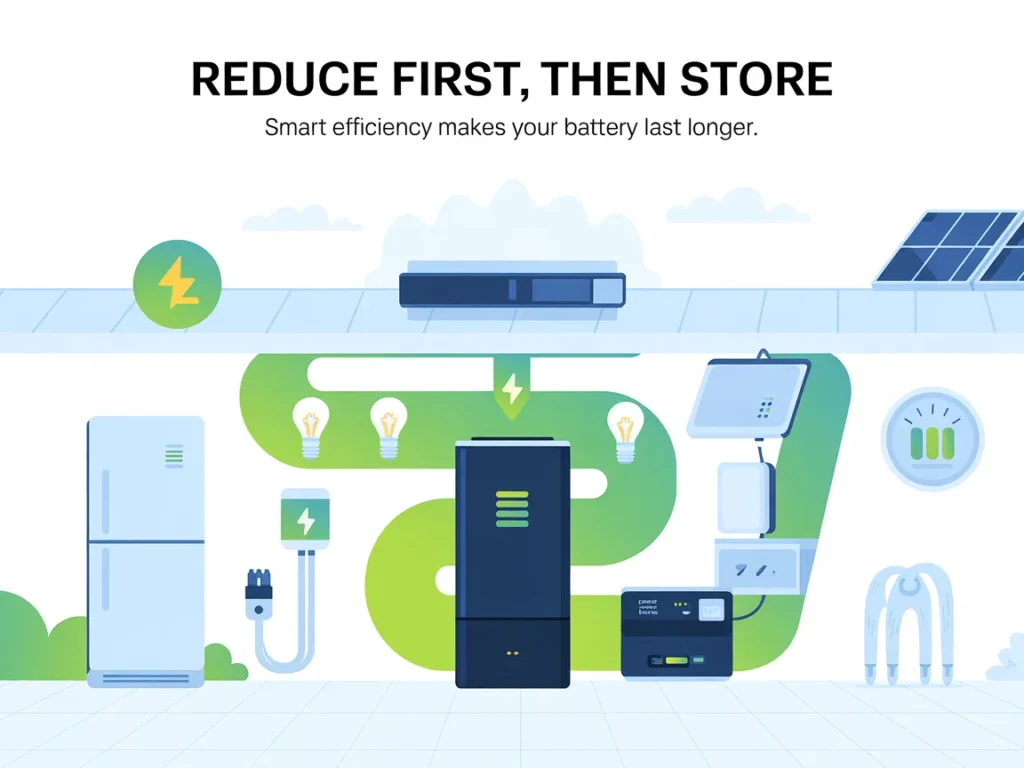
Here’s the part most people skip because it’s not flashy. But it’s the difference between needing a huge system and needing a modest one.
When you reduce waste, every backup option becomes more effective:
- Batteries last longer
- Generators run less
- Any alternative energy setup has an easier job
Checklist:
- Seal obvious drafts (doors, windows, attic access points)
- Use LEDs everywhere you can (quick, cheap, noticeable)
- Reduce phantom loads (smart power strips, unplug rarely used devices)
- Adjust thermostat habits modestly (small changes add up)
- Maintain major equipment (dirty filters and neglected units cost power)
Do this now: Pick one “waste” fix you can complete in under 60 minutes.
Next: once you’ve lowered the load, you can choose a backup approach that actually fits.
Step 4: Build a realistic “essentials-only” backup plan
This is where many people go wrong—they try to back up the entire home. You usually don’t need that for meaningful independence.
An essentials-only plan focuses on:
- Keeping food from spoiling
- Keeping communications online
- Keeping lighting and small devices running
- Supporting specific needs (medical devices, home office basics)
Checklist:
- Decide: portable power vs. generator vs. mixed approach
- Map where essentials plug in (kitchen, office, bedroom)
- Identify extension cord needs or safe power distribution
- Plan how you’ll recharge (grid when available, vehicle, other sources)
- Store a simple outage kit (batteries, flashlights, spare charging cables)
Do this now: Choose 1 room as your “essentials hub” and list what must work there.
Step 5: Add independence in layers (without locking into rooftop solar)
Now you’re ready to explore options that help you reduce dependence without signing up for a long install process.
Depending on your situation, layered independence could include:
- A portable power setup for essentials
- A generator for longer outages (used correctly and safely)
- Home efficiency upgrades that permanently reduce consumption
- Alternative energy concepts that don’t rely on a roof install
Checklist:
- Choose one upgrade that matches your goal and constraints
- Make sure it supports your essentials list (not your fantasy list)
- Plan storage space and maintenance (where it lives matters)
- Stick to a “one upgrade at a time” rule to avoid overwhelm
- Re-check your usage after each upgrade and adjust calmly
Do this now: Commit to one next-layer upgrade—not five.
Common Mistakes
Mistake 1: Trying to power the whole house immediately
Why it happens: It feels like the “complete” solution.
Simple fix: Start with an essentials list and size everything to that first.
Mistake 2: Skipping efficiency because it feels boring
Why it happens: Products are more exciting than air sealing and LEDs.
Simple fix: Treat efficiency as a power multiplier—do it before you buy bigger gear.
Mistake 3: Buying equipment without a clear goal
Why it happens: Fear of outages or rising bills can push impulse purchases.
Simple fix: Define your target (bills, backup, or both) and buy only what supports it.
Mistake 4: Overestimating what “portable power” can run
Why it happens: Marketing can make small systems look like whole-home solutions.
Simple fix: Verify what you want to run and prioritize low-watt essentials.
Mistake 5: Planning for rare scenarios but ignoring daily savings
Why it happens: Big events get attention; daily waste is invisible.
Simple fix: Split your plan: daily efficiency + essentials backup.
Mistake 6: Getting overwhelmed by contradictory advice
Why it happens: Everyone’s home and needs are different.
Simple fix: Use the same framework every time—basics first, upgrades second—and decide step-by-step.
Next: let’s compare your main paths so you can choose what fits your home and budget.
Options Comparison
Option 1: Efficiency-first home upgrades
Best for: Budget-conscious homeowners who want immediate, lasting reduction in usage.
Pros:
- Often the fastest way to reduce consumption
- Makes every backup approach perform better
- Improves comfort (temperature stability, fewer drafts)
Cons:
- Not “instant independence” during outages
- Some upgrades take time (insulation, weatherization planning)
Option 2: Portable battery power for essentials
Best for: People who want quiet, simple backup for small devices and must-run items.
Pros:
- Flexible and movable
- Useful for short outages and essential electronics
- Doesn’t require permanent installation
Cons:
- Limited runtime for high-draw appliances
- Recharging plan matters (otherwise it’s just a big battery)
Option 3: Generator-based backup
Best for: Longer outages when you need more sustained power.
Pros:
- Can support higher loads than many portable batteries
- Practical for extended outages
- Widely available and familiar
Cons:
- Noise and fuel storage considerations
- Requires safe operation and maintenance
Option 4: Partial home backup (selected circuits / essentials focus)
Best for: Homeowners who want a more organized setup without powering everything.
Pros:
- More structured than random extension cords
- Easier to stick to essentials and avoid overload
- Can scale over time
Cons:
- May require planning or professional help depending on setup
- Still needs realistic load estimates
Option 5: Alternative “system-style” approaches (non-rooftop)
Best for: DIY-leaning homeowners and self-sufficiency seekers who want more control without a full solar install.
Pros:
- Can be approached step-by-step
- May fit people who can’t—or don’t want to—do rooftop panels right now
- Focuses on a repeatable method rather than random products
Cons:
- Requires learning and following a plan
- Not every method fits every home or local situation
Which option should you pick?
If you’re a homeowner trying to reduce grid dependence without turning your life into a construction project, start with efficiency + an essentials backup plan. From there, choose what matches your constraints: space, budget, and how hands-on you want to be. DIY enthusiasts may prefer a methodical system approach; others may prefer a simpler essentials-only setup.
Next: if you want a walkthrough that ties these ideas together into a clear system, there’s a presentation worth seeing.
Ressources
If you’ve been asking, “Can You Do Energy Independence Without a Full Solar Install?” the hardest part usually isn’t motivation—it’s sorting through competing opinions and turning them into a plan you can follow.
One resource that may help is the Energy Revolution System presentation. It’s structured as a walkthrough you can watch to understand the approach, how the system concept works, and what’s included.
Even if you’re not ready to commit to any major changes, it can be useful as a way to get clarity—so you can decide what steps make sense for your home, your budget, and your comfort level.
You’ll see how it works, what’s included, and whether it fits you.
In the presentation, you’ll see:
- The Energy Revolution System overview and how the approach is explained
- What’s included in the system and how it’s laid out
- How the method is positioned for people looking beyond a full rooftop solar install
FAQ
Is this realistic for regular homeowners, not hardcore off-grid people?
Yes—many people start by reducing consumption and focusing on essentials. The Energy Revolution System presentation is framed as a way to understand an alternative approach in a structured, follow-along format.
Is this beginner-friendly if I’m not technical?
If you can follow a step-by-step explanation, you can evaluate whether the approach makes sense. The key is to keep it simple: basics first, upgrades second.
Do I need special tools to start working toward energy independence?
Not to begin. The early wins are about clarity, reducing waste, and planning your essentials list before you choose equipment.
How long does it take to see progress?
Often, the quickest progress comes from cutting obvious waste and organizing an essentials plan. Bigger changes depend on your timeline and what you select as your next layer.
Can you do energy independence without a full solar install if your roof isn’t ideal?
Yes, at least partially. Roof limitations are exactly why many people explore non-rooftop options and efficiency-first strategies.
What if I live in an HOA or have restrictions?
That’s common. Start with efficiency and portable/essentials-focused planning—then explore approaches that don’t rely on a roof install.
Will this lower my electric bill or just help with outages?
It can be either, depending on your target. Efficiency-first changes often impact bills; essentials backup focuses more on resilience.
What should I do if I’m overwhelmed by choices?
Stop researching products and return to the framework: define your goal, list essentials, cut waste, then choose one upgrade. The presentation can also help you see a full method laid out in one place.
Mini Summary + Action Plan
- Audit your situation: define what “independence” means for you (bills, outages, or both)
- Make an essentials list and focus on what truly matters
- Reduce wasted energy first so every backup option works better
- Check progress monthly (usage, comfort, and what you actually relied on)
- Keep your plan simple: one upgrade at a time
- Add the next layer only after the basics are stable
- Choose non-rooftop or partial solutions if a full solar install isn’t practical right now
Basics first, upgrades second is how you build energy independence without getting stuck in expensive complexity.
Conclusion
So—Can You Do Energy Independence Without a Full Solar Install? For many homeowners, yes: not by trying to replace the grid overnight, but by building independence in layers.
Start with clarity. Shrink the problem to essentials. Cut waste so any backup lasts longer. Then add one “next layer” upgrade that fits your home and your comfort level.
That’s how you end up with a calm, practical setup you can actually use—whether it’s a storm, a brief outage, or simply a month where the bill would normally surprise you.
If you want to see a full walkthrough of an alternative approach presented as a system, the next step is to watch the Energy Revolution System presentation and decide if it fits your situation.
SEE THE FULL PRESENTATION HERE